
Tiny, silent and able to pass through normal screens: what...
Read MoreAre Mosquito Misting Systems Safe? Kids, Pets, Bees and Fish Ponds
Quick answer
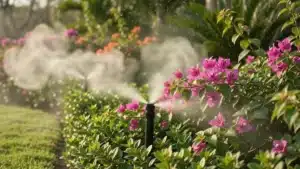
Mosquito misting systems are low risk for people and pets when they are designed and used correctly: they use a diluted botanical concentrate (pyrethrins), mist for less than a minute at dawn and dusk, and aim at plants, not people. The real risks are for fish and bees, so nozzles must stay away from ponds and flowering plants. Like any insecticide, it is low risk, not zero risk.
"Is it safe?" is the first question almost every family, pet owner and hotel manager asks us, and it deserves a straight answer. Below we explain what is in the mist, what independent science says about each group, from kids and dogs to bees and fish, how quickly the product breaks down in Costa Rica's sun, and the simple habits that keep a system safe.
What Is Actually in the Mist?
Most misting systems, including the ones we install, use a concentrate based on pyrethrins, natural insecticides found in some chrysanthemum flowers. The concentrate is mixed with water, so each mist is highly diluted. Pyrethrin products are often combined with a second ingredient, called a synergist, that makes them work better.
Before installing, we tell you exactly which product goes into your system and show you its label, so you know what you are using around your home.
Safety for People, Pets, Birds, Bees and Fish
The table below summarizes what the National Pesticide Information Center (NPIC), a program of Oregon State University and the U.S. EPA, reports about pyrethrins, and what we do about each point.
| Who or what | What the science says | How we design around it |
|---|---|---|
| People | What the science saysPyrethrins are "low in toxicity to people and other mammals." Direct contact can irritate the skin or airways. | How we design around itMists run at dawn and dusk, when no one is usually outside, and nozzles point at plants, not seating areas. |
| Dogs and cats | What the science saysProblems in dogs were reported only after "extremely large doses." | How we design around itKeep pets inside during the short mist, and keep water and food bowls away from nozzles. |
| Birds | What the science saysPyrethrins are "practically non-toxic to birds." | How we design around itNo special changes needed beyond normal targeted placement. |
| Bees and butterflies | What the science saysPyrethrins are "highly toxic to honey bees." | How we design around itNo nozzles on flowering plants, and mists only at dawn and dusk, when pollinators are less active. |
| Fish, ponds and pools | What the science saysPyrethrins are "highly to very highly toxic to fish" and aquatic insects. | How we design around itNo nozzles near fish ponds, and pool-side nozzles aimed away from the water. |
Bottom line: for people, pets and birds the risk is low with normal use. Fish and bees are the groups that need real protection, and that protection comes from where the nozzles are placed.
How Fast Does It Break Down in the Sun?
Pyrethrins do not linger. According to NPIC, light breaks them down quickly:
- In sunlight: pyrethrins have a half-life of about 12 hours on soil surfaces and in water.
- In soil: reported half-lives range from about 2 to 10 days.
- In the dark, in water: they last longer, about 2 weeks, which is one more reason to keep mist away from ponds.
That fast breakdown is why misting systems treat the same resting areas every day, instead of relying on one heavy application. It is also why Guanacaste's strong sun works in favor of the environment.
Is a Misting System Eco-Friendly?
It is more accurate to call a well-designed system eco-conscious than harmless. Any insecticide, even a botanical one, has to be used responsibly. What makes the difference is how it is applied:
- Targeted, not blanket: nozzles treat the shaded plants where mosquitoes rest, instead of fogging the whole property.
- Short and timed: mists of less than a minute at dawn and dusk.
- Seasonal: more cycles in the rainy season, fewer in the dry months.
- Sensitive areas excluded: ponds, flowering plants and vegetable gardens.
Combined with removing standing water, this approach controls mosquitoes while respecting the wildlife that makes Costa Rica special. See our full approach to eco-friendly mosquito control in Guanacaste.
A Simple Safety Checklist for Owners
- Stay inside during the mist. Each cycle lasts less than a minute, and it usually runs when no one is outside anyway.
- Skip a mist from your phone when you have a garden party, kids playing outside or gardeners working.
- Move pet bowls and toys away from nozzles, and keep pets inside during the cycle.
- Tell us before adding a pond, beehive or vegetable garden, so we can move or turn off the nozzles nearby.
- Never point or adjust nozzles yourself. Their angle is part of the design.
- Keep up with maintenance. Clean, well-aimed nozzles put the mist only where it should go.
Frequently Asked Questions
Is the mist safe to breathe?
Pyrethrins are low in toxicity to people, but breathing the mist directly can irritate the nose and airways. That is why the system runs when people are usually not outside, for less than a minute, and why you should stay inside during a cycle.
Is a misting system safe for dogs and cats?
Yes, with normal precautions. Keep pets inside during the short mist and keep their bowls away from nozzles. Cats are known to be very sensitive to permethrin, a synthetic product used in some pest treatments, so always ask which active ingredient your system uses.
Does a misting system kill bees and butterflies?
Pyrethrins are highly toxic to bees, so placement is critical. We keep nozzles away from flowering plants and mist only at dawn and dusk, when pollinators are less active.
Can I swim in the pool after a mist?
Pool-side nozzles are aimed away from the water. As a simple rule, wait until the mist has fully settled before using the pool, and skip the next cycle from your phone if you plan to swim at that time.
Are pyrethrins organic?
Pyrethrins come from chrysanthemum flowers, so they are of botanical origin. Whether a specific product is certified for organic use depends on its full formula, so we show you the label of the concentrate in your system.
More questions? Read our safety FAQ.