
Tiny, silent and able to pass through normal screens: what...
Read MoreMosquito Season in Guanacaste: A Month-by-Month Guide
Quick answer
Mosquito season in Guanacaste follows the rainy season, from May to November, with the heaviest activity usually in September and October, the rainiest months. The dry season, from December to March, brings fewer mosquitoes but not zero. In 2026 Costa Rica reported more than 7,000 dengue cases by mid-November, so protection matters most from May onward.
Guanacaste has one of the most predictable climates in Costa Rica: a long dry season and a rainy season split by a short dry spell. Mosquitoes follow that calendar almost exactly. This guide uses data from Costa Rica's National Meteorological Institute (IMN) and the Ministry of Health to explain what to expect each month in Tamarindo, Nosara, Santa Teresa and the rest of the North Pacific, and how to prepare your property.
Guanacaste Mosquito Season, Month by Month
The weather column is based on the IMN climate profile for the North Pacific region. The mosquito column reflects a simple rule: more standing water means more breeding.
| Months | Weather in Guanacaste | What to expect | What to do |
|---|---|---|---|
| December to March | Weather in GuanacasteDry season. Only about 4% of the year's rain falls in these months. | What to expectFewer mosquitoes, but not zero. Irrigated gardens, pool covers and AC drip trays still hold water. | What to doRun a reduced schedule and check for water around irrigation. |
| April | Weather in GuanacasteTransition month between the dry and rainy seasons. | What to expectEggs that survived the dry months are waiting for the first rains. | What to doService the system, refill the concentrate and clean gutters before the rains. |
| May to June | Weather in GuanacasteFirst rainy season. Rains usually start in the last third of May, with a first peak in June. | What to expectMosquito numbers rise fast as containers and gutters fill. | What to doAdd mist cycles and check for standing water every week. |
| July to August | Weather in GuanacasteThe "veranillo" or canícula: a drier, windier break in the rainy season. | What to expectFewer storms, but water from earlier rains keeps mosquitoes breeding. | What to doKeep the rainy-season schedule. |
| September to October | Weather in GuanacasteThe rainiest months of the year in Guanacaste. | What to expectUsually the heaviest mosquito pressure of the year. | What to doMaximum cycles, and check gutters and drains after every storm. |
| November | Weather in GuanacasteTransition back to the dry season. | What to expectMosquitoes decline gradually as the ground dries. | What to doReduce cycles once the rains stop. |
Why the Rains Bring More Mosquitoes
Mosquitoes need standing water to breed, and in warm weather a mosquito can go from egg to biting adult in about a week. Every rain fills gutters, plant saucers, bromeliads and drains, and each one can become a nursery.
The Aedes aegypti mosquito, which can transmit dengue, Zika and chikungunya, adds another problem: its eggs stick to the walls of containers and can survive the dry season. When the first rains of May arrive, they hatch together. That is why mosquito numbers jump so quickly at the start of the rainy season, and why the best time to prepare is April, before the rains. Learn more about the mosquitoes of Guanacaste and how to control them.
Dengue and Chikungunya in 2026
2026 has been a heavy year for mosquito-borne illness in Costa Rica:
- Dengue: the Ministry of Health reported 7,017 cases nationwide as of November 13, 2026, compared with 4,345 on the same date in 2025, according to CR Hoy.
- Chikungunya: in July 2026 the Ministry investigated an outbreak in Playa Langosta, Santa Cruz, right next to Tamarindo, with 45 suspected cases, and fumigated nearly 5,000 homes, according to CR Hoy.
The Ministry of Health recommends using registered repellent, mosquito nets and emptying any container that collects water, and visiting a health center for symptoms such as high fever or joint pain. A misting system reduces mosquitoes around your home, but it is one layer of protection, not a guarantee, so keep following those recommendations.
How to Prepare Your Property Before the Rains
The weeks before the first rains, usually in April, are the best time to get ahead of mosquito season:
- Clean gutters and drains so rainwater flows instead of pooling.
- Empty or flip anything that holds water: buckets, plant saucers, toys, tires and coconut shells.
- Flush bromeliads and change water in bird baths and pet bowls every few days.
- Check pool and boat covers and drain the water that collects on top.
- Trim dense vegetation near terraces, where mosquitoes rest during the day.
- Service your misting system in April, so it is refilled, cleaned and ready before the first rains.
Want the full list? See our standing water checklist.
How a Misting System Adapts to the Seasons
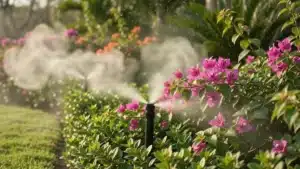
A MistAway misting system is programmed around this calendar. We add cycles from May, keep them through the veranillo, run the most cycles in September and October, and reduce them once the dry season starts. You can also skip or add a mist from your phone at any time.
The dry season does not always start on the same date. In 2026, the IMN reported that the North Pacific finished its transition and entered the dry season on November 15, a little earlier than usual because of El Niño, according to CR Hoy. That is why we adjust the schedule to the real weather, not a fixed date.
Frequently Asked Questions
When is mosquito season in Guanacaste?
Mosquito season follows the rainy season, from May to November. Activity usually peaks in September and October, the rainiest months, and drops during the dry season from December to March.
Are there mosquitoes in Guanacaste during the dry season?
Yes, but far fewer. Irrigated gardens, pool covers, AC drip trays and plant saucers can still hold water, so some mosquitoes keep breeding even from December to March.
What is the worst month for mosquitoes in Tamarindo?
September and October are usually the worst, because they are the rainiest months of the year in Guanacaste. The start of the rains in May and June also brings a sharp rise.
Is it safe to visit Guanacaste in the rainy season?
Many people visit and live in Guanacaste year-round. Follow the Ministry of Health recommendations: use registered repellent, sleep with mosquito nets where needed, and see a doctor if you get a high fever or joint pain.
When should I service my misting system?
Before the rains, ideally in April, so the system is refilled, cleaned and on the rainy-season schedule when mosquito numbers start to rise in May.
More questions? Read our mosquito misting FAQ.